A busy workshop does not need more of every enquiry. It needs suitable work, from drivers it can serve, at times the team can actually deliver. A useful marketing plan starts with those limits before choosing keywords, advertising or automation.
This guide is written by No Brainer Creative, an Auckland agency offering digital marketing services. Our published automotive work includes Extra Mile Car Mechanics. The suggestions below are a planning framework, not a claim that a particular campaign produced a measured increase in bookings.
1. Decide which jobs the workshop wants
List the services you want to promote, the vehicles you can accommodate and the area customers reasonably travel from. Separate routine servicing from diagnostics, tyres, WOF work or specialist repairs where those services genuinely apply. A driver searching for a service needs a different answer from someone asking about an unfamiliar warning light.
Check the operational details with the person running the workshop. Which jobs need a phone conversation first? Which can be requested online? Who confirms a time, and what happens when the schedule is full? Only advertise certifications, facilities, loan cars, prices and turnaround times that the business can substantiate.
Write a short campaign brief: the service, customer, catchment, capacity, offer and next step. “General repairs for local drivers who can leave a vehicle with us” is a more useful starting point than “more leads”.
2. Make local search information consistent
Review the workshop’s Google Business Profile against the website: name, address, phone, normal hours, genuine services and customer-facing location. Check holiday hours separately. Use real workshop and team photos with permission, and keep service information understandable.
Google explains that local results depend mainly on relevance, distance and prominence. Complete information helps Google understand a business, but adding suburbs to a description cannot remove the distance factor. A workshop should describe the places it actually serves, without setting up duplicate profiles or adding keywords to its business name.
Check important existing directory listings for old addresses and phone numbers. Correct the original listing where possible instead of creating another version. See Google’s local ranking guidance and our local SEO guide for the distinction between Maps visibility and website rankings.
3. Give each important service a useful website page
A service page should help a driver decide whether to contact the workshop. Explain what the service covers, what information the team needs and whether the next step is an inspection, a quote or an appointment request. Put the address, contact options and any relevant conditions where people can find them on a phone.
- Describe the scope: the actual service and relevant vehicle limitations, without diagnosing a customer’s vehicle from a generic web page.
- Explain the next step: distinguish a preferred appointment request from a confirmed booking.
- Show real evidence: workshop photos, factual qualifications and genuine customer feedback used with appropriate permission.
- Keep claims current: remove expired offers and qualify estimates that depend on inspection, parts or workshop availability.
Avoid making near-identical pages for every Auckland suburb. One clear service page and useful location information can serve customers better than a stack of pages that only swap a place name. Our website design service covers the page structure and enquiry journey when the existing site needs work.
4. Choose advertising around the job and catchment
Search advertising can be useful when people are already looking for a service. Start with a clearly scoped service and a relevant landing page. Review the actual search terms so unrelated jobs, training, DIY research or services the workshop does not provide do not quietly consume attention and budget.
Google Ads distinguishes a person’s location from interest in a location, and its default advanced setting can include both. Review the location options against the workshop’s practical catchment and inspect geographic performance. Location signals are estimates, so check actual enquiry suitability rather than assuming every click came from a nearby driver. Google’s geographic targeting explanation describes those limits.
Facebook and Instagram can support a specific offer or explain a workshop service to an audience. They still need accurate creative, a suitable next step and a person handling replies. Keep advertising spend separate from agency fees, and agree any budget changes in advance. Our Google Ads management and Meta advertising pages explain the service scope.
5. Check the enquiry journey before sending more traffic
Walk through the process from a driver’s perspective. Can they find the phone number, read the service information and tell whether their message was received? A success message on a website does not, by itself, establish that an email reached the workshop’s inbox or that an appointment entered its calendar.
Before launch, agree a controlled test with the business. Verify the saved enquiry, notification delivery, assigned person and reply route. For a booking system, also check the chosen service, actual availability, timezone, confirmation and cancellation process. Label the test and avoid sending surprise messages to customers.
Keep the form proportionate. A name, contact method, requested service and brief vehicle details may be a sensible starting point; decide what is essential for your workflow. Do not invite people to publish personal vehicle or contact information in a public comment when a private enquiry is appropriate.
6. Use follow-up and reviews responsibly
Reminders need reliable customer records, an agreed purpose and a clear person responsible when delivery fails or a customer replies. Confirm the workshop’s permissions and applicable messaging requirements before activating promotional follow-up. A reminder is not proof of a completed service or a future booking.
For reviews, use a neutral process after genuine customer experiences. Do not offer a discount for a review, ask only customers expected to be positive, or tell customers which keywords to write. Google requires reviews to reflect real experiences and prohibits incentives; see its review guidance.
7. Report useful enquiries and completed work separately
Keep a simple record of source, requested service, suitable or unsuitable enquiry, booking status and completed work where the workshop can verify it. Separate spam, existing-customer administration, missed calls, phone-link clicks and actual conversations. Agree definitions before comparing channels.
For example, imagine a campaign produced 20 recorded enquiries, of which 12 matched the service and catchment, eight became confirmed bookings and six resulted in completed jobs. Those are four different counts. This is an illustration, not a No Brainer client result. A click total alone cannot tell you which stage needs attention.
Compare advertising costs and management fees with the relevant verified outcomes. Review the workshop’s capacity and the value of the work as well as volume. Keep organic desktop, mobile and Maps positions separate, with dates and locations recorded; rankings are useful diagnostics, not a substitute for booked work.
Real project context: Extra Mile Car Mechanics
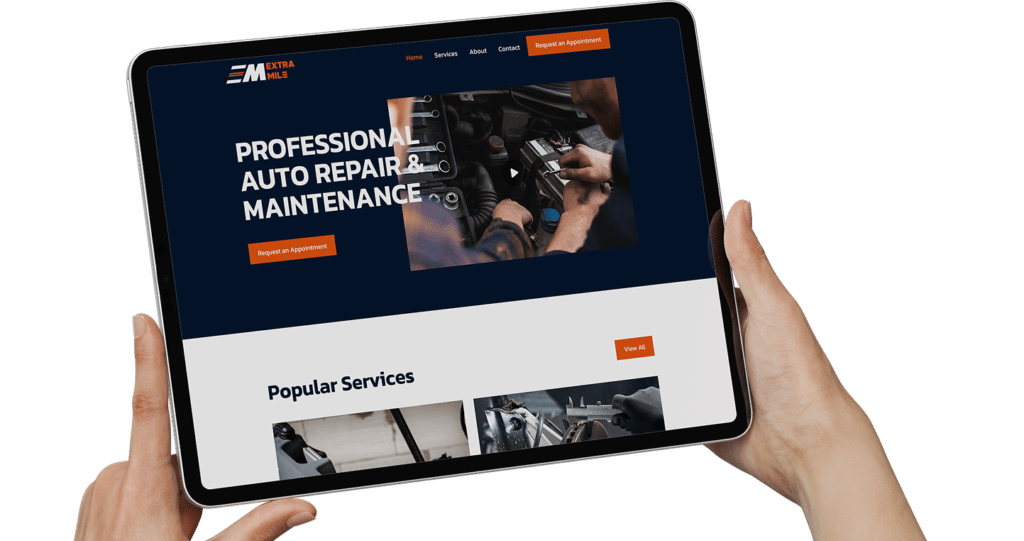
The Extra Mile project brings together automotive service information, responsive website design, a booking journey and reminder workflow scope. It provides a concrete example of the pieces a workshop may need to connect. The project page describes the work; it does not establish a measured sales increase, current message delivery or a guaranteed outcome for another workshop.
A practical starting checklist
- Choose the services and customer area you can support.
- Check the public business information and important service pages.
- Verify the phone, form and booking handoff with an agreed test.
- Choose a channel, budget and offer that fit capacity.
- Review suitable enquiries, confirmed bookings and completed jobs separately.
If you need help prioritising the website, search, advertising and follow-up work, talk to No Brainer. Bring the services you want more of, the catchment you serve and what your team can currently handle.
Prefer to discuss your workshop’s website or marketing by phone? Call No Brainer on 022 125 2166.
Questions workshop owners ask
Should a mechanic start with SEO or Google Ads?
Start with the constraint. If the business information or enquiry journey is unreliable, address that first. Local SEO can improve the underlying information and service pages; paid search can test a specific service with a separate budget. Neither guarantees bookings.
Do we need a separate page for every suburb?
Only create pages when there is distinct, useful information for customers. Repeating the same service description with different suburb names is not a sound content plan. Explain the real location, catchment and services clearly.
Can automation confirm every repair booking?
That depends on the workshop’s availability rules and the connected system. Some jobs need diagnosis or a conversation before a time can be confirmed. Agree and test the process, and tell customers when they have made a request rather than a confirmed appointment.
What should we measure each month?
Track suitable enquiries, confirmed bookings and completed work alongside channel costs and the available search data. Keep unverified calls, clicks and website messages distinct. The definitions and access available to the workshop determine what can be reported reliably.