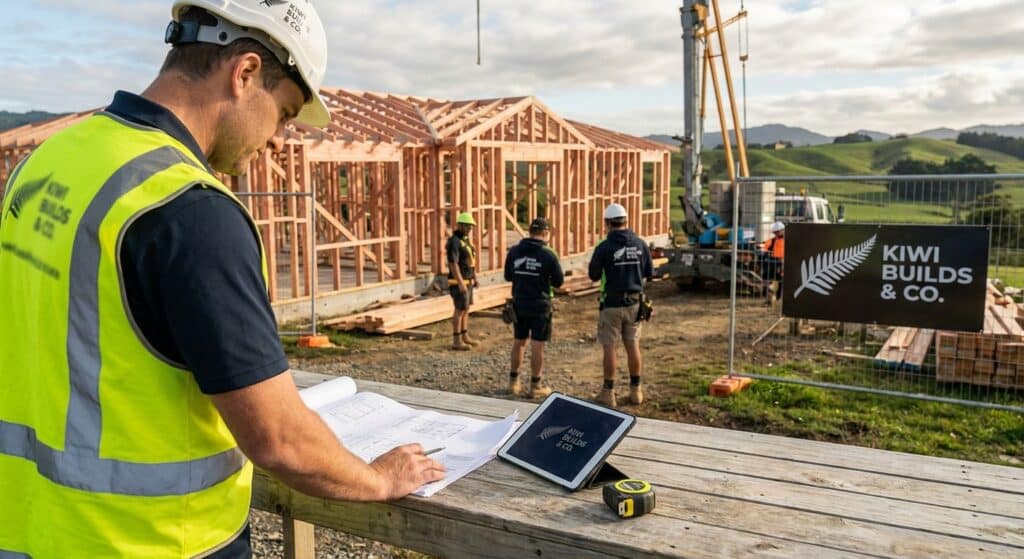
Branding for a building or construction business should make the company’s information clear and its materials practical to use. A useful identity needs to work across the applications you actually commission: quotes, project documents, website pages, vehicles, signage and workwear.
This guide is written by No Brainer Creative, an Auckland agency offering design, website and marketing services. It provides a project brief, not an independent ranking of providers or a promise that new branding will win tenders, justify a higher price or produce more work.
Define the business before choosing a new look
Describe the services you genuinely provide, the customers you want to reach and the type of work you want to be considered for. A renovation specialist, home builder and commercial contractor may need different evidence and information even when they use similar design materials.
List what already works. Existing recognition, useful project photographs and a clear company name can be valuable. A problem with inconsistent files or quote templates does not automatically require a new logo or business name.
- Record the current identity files, websites and supplier-held artwork.
- Identify the applications that are unreadable, inconsistent or difficult to maintain.
- Confirm who approves business descriptions, project claims and credentials.
- Agree the project owner, feedback process, budget and any real production deadlines.
Build a practical application register
Use an application register to make the scope concrete. Record the item, audience, content owner, production supplier, file requirement and approval check. This helps distinguish design work from printing, installation and ongoing updates.
| Application | Information to agree | Check before release |
|---|---|---|
| Quote or proposal template | Business identity, contact details, editable scope and approved terms | Staff can use it without losing required information |
| Vehicle graphics | Vehicle model, usable areas, contact details and installer specifications | Layout reviewed on the correct vehicle template and proof |
| Site sign | Size, location, required business details and production method | Legibility and supplier proof checked; relevant project requirements confirmed |
| Workwear | Garment, placement, print or embroidery process | Supplier confirms artwork suitability and sample or proof |
| Website and project pages | Current services, approved photographs, project scope and enquiry routes | Readable phone layout, accurate claims and working links |
Check the identity in real applications
Review the mark at relevant sizes, in the required colour and single-colour versions, and against the actual backgrounds. Check that the business name and contact details remain readable. Do not decide solely from a large logo presentation on a plain screen.
Ask each production supplier for its file, colour, minimum-size and reproduction requirements. Vehicle graphics, embroidery and printed signs may need different preparation. A design approval is different from approval to manufacture or install the item.
Our tradie logo guide can help frame the identity discussion. The proposal should identify the actual concept and revision process; there is no universal number of rounds that fits every brief.
Use project evidence accurately
Choose photographs and descriptions of work the business is authorised to show. Explain the company’s actual role, the services delivered and any limitations on what can be published. Do not imply responsibility for an entire project when the business completed only part of it.
Keep claims about qualifications, memberships, warranties, delivery times and outcomes supported and approved. A polished project page is a presentation asset, not proof of construction capability or a guaranteed result for the next client.
Review staff, client and photographer permissions before publishing names or imagery. Where project information cannot be shared, agree a truthful alternative rather than substituting stock imagery as if it were the company’s completed work.
Connect the identity to useful website information
A construction website can explain services, genuine coverage, relevant project evidence and the right next step for an enquiry. Preserve useful existing URLs and content when applying a new identity. A branding rollout is not a reason to erase search history or redirect every page to the homepage.
Our construction website planning guide covers page and enquiry requirements. The builder SEO guide considers search work separately. Branding, website repair, SEO and paid campaigns do not need to follow a fixed sequence; priorities should address actual evidence and dependencies.
Plan a controlled rollout
List every application that needs to change and identify which can be retained until a sensible replacement point. Review contact details, website links and filenames so staff and suppliers know which artwork is current. Keep a rollback copy of existing website and design assets where appropriate.
If a name, domain or identity changes, agree how existing customers and suppliers will recognise the business and how old materials will be handled. Our rebranding planning guide provides questions for that transition without promising customer retention.
Compare the full scope and handover
Separate discovery, design, copy, photography, template setup, production, installation, website changes and ongoing support. The quote should state what the fee includes, the approvals needed, the revision scope and how additional work is agreed.
Agree editable files, export formats, logo variants, colour and typography guidance, font or asset licences and ownership terms. Check who holds supplier artwork and who can maintain each template. Do not assume a delivered image gives the team everything required for future print or website work.
Discuss a useful starting scope
No Brainer is based in Auckland and works with New Zealand businesses. Our graphic design service can be scoped around your real applications. Send the current identity and requirements or call 022 125 2166 to discuss what needs to be retained, repaired or created.
For marketing-provider selection, see our trade-business marketing comparison guide. Keep the design deliverables separate from any unverified tender, ranking or enquiry outcome.
Frequently asked questions
Where should a construction branding project start?
Start with the actual business offer, audiences, useful existing identity and the materials that need improvement. Agree whether the problem calls for a refresh, missing templates or a larger change before replacing everything.
Does the logo need to change?
Not necessarily. Review legibility, available files, consistency and business recognition. A useful existing mark can be retained while its applications, typography or supporting materials are improved.
How should a logo be checked for site use?
Review agreed applications such as a quote document, vehicle layout, site sign, workwear and a small website view. Obtain production specifications and proofs from the relevant supplier rather than assuming one artwork file suits every process.
Will new branding help us win tenders or charge more?
This guide does not establish that outcome. Clear presentation can support communication, but tender decisions also depend on the actual proposal, capability, references, price and project requirements.
Should the website, SEO and advertising follow a fixed sequence?
No universal order applies. Use the demonstrated gaps, real deadlines, capacity and available budget to agree priorities. Preserve useful pages and working enquiry routes during any rollout.
How many revisions should be included?
The proposal should state the actual concept, feedback, revision and approval scope. Do not assume a standard round count or an unlimited change allowance.
What files and templates should be handed over?
Agree the required logo variants and formats, colour and type guidance, authorised fonts or assets, template files, production notes and ownership or licence terms. Identify what remains with a supplier and who can make later changes.
Can No Brainer help construction businesses with branding?
No Brainer is an Auckland creative agency offering graphic design, web design and marketing. Share the current identity, practical applications and business requirements so a useful scope can be proposed. No tender, ranking or enquiry outcome is guaranteed.