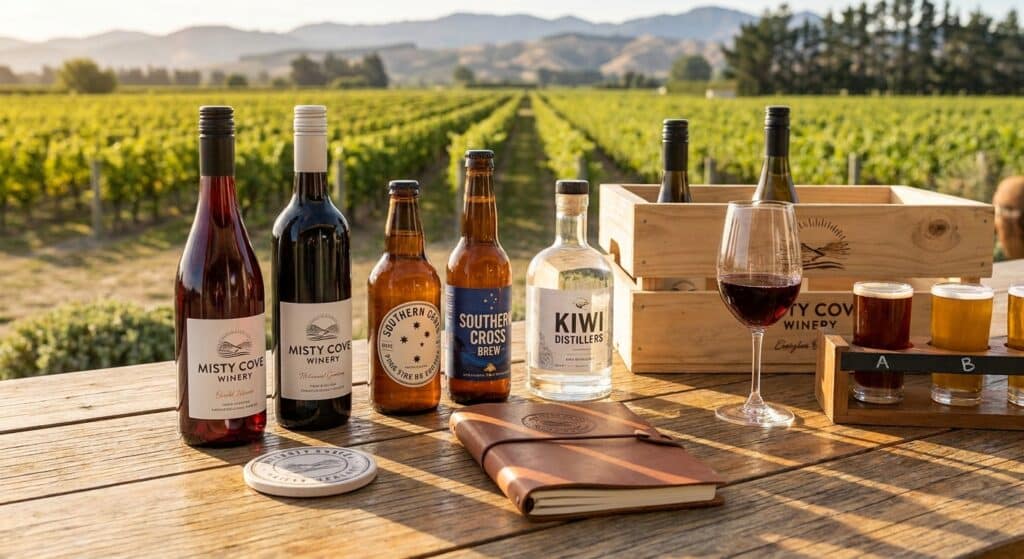
Branding for a winery or craft beverage business needs to work across the actual product range and the places customers encounter it: bottles or cans, cartons, visiting information, online product pages and other materials in scope. Start with accurate information and production requirements before choosing a creative direction.
This agency-authored guide is from Auckland-based No Brainer Creative. It describes a design briefing and approval process, not a ranked list of styles, a claim of beverage-client results or a guarantee of retail sales. It does not certify product labels, environmental claims or export compliance.
Review what should be retained and what needs changing
Collect the current identity files, product artwork and guidelines. Describe the actual limitation: missing files, inconsistent product names, a new pack format or a range that needs clearer organisation. A label adjustment and a complete identity project are different pieces of work.
Keep useful elements where they fit. Do not invent a rebrand deadline or assume every new release needs new artwork from scratch. The rebrand planning guide provides questions for the wider rollout; it is not evidence that a particular change protects or loses sales.
Create a product and artwork register
List the actual wines or beverages and the formats the project needs to support. Identify which information is shared across the range and what changes for a product, vintage, variant, pack or market. Avoid treating a single approved label as approval for every future adaptation.
- Product: the exact name and variant in scope.
- Format: the bottle, can, carton or other application and its supplier requirements.
- Market: the intended use and the producer’s approved requirements.
- Content: the authorised text, imagery and supporting evidence.
- Version: the artwork reference and date for review.
- Approval: the person responsible for the content and production proof.
Use the register when requesting changes so a new product image, description or label is traceable to the intended version. Agree who maintains it after handover.
Compare creative directions on the same applications
A restrained wordmark, illustrated identity, heritage treatment or more abstract design can each be explored. Ask how the concept identifies the business and distinguishes the actual products without relying on invented consumer behaviour or an unsupported “Buy” verdict.
Apply shortlisted directions to the same agreed formats and review them at their actual sizes. Check the brand and product names, necessary information and the relationship between variants. Mock-ups are useful review aids, not proof of customer recognition or production suitability.
Use only business history, origin information and imagery the producer can support. A creative style should not imply a multi-generation estate, certification or sourcing practice that has not been established. The food-brand logo guide offers related questions about identity applications.
Separate design from specialised content approval
The producer needs to establish the requirements for its actual products and markets with appropriate qualified review. MPI’s alcoholic-drinks labelling guidance is a starting reference for that process, not a substitute for product-specific approval.
Work from approved content and record who checks it before production. Do not assume a general “export-ready” layout satisfies every market or that leaving blank space on a back label certifies the required information.
For environmental statements, the Commerce Commission’s guidance calls for accurate, scientifically sound and substantiated claims. Keep the evidence and approval responsibility clear. A natural-looking palette or leaf symbol does not establish an environmental benefit.
Use the actual supplier specifications
Confirm the artwork requirements for the intended material, dimensions, print process and finish with the supplier. Plan any required production proof and identify who approves it. Do not copy a universal font, bleed, colour or timing rule from a generic branding article.
Record any adaptation needed for another pack or supplier and keep it separate from changes to approved content. The handover should identify the final artwork, relevant variants and instructions agreed in scope, along with the process for later amendments.
Keep the website and brand brief connected
See the separate website brief for visiting information, orders and wine-club journeys.
Keep the release plan practical
Inventory labels, packaging stock, signs, menus, website pages and other materials that actually need updating. Agree the sequence with the people responsible for production and publishing. Identify superseded files so staff and suppliers can use the intended artwork.
The ecommerce branding guide covers related digital applications. A hospitality SEO plan is a separate scope with its own evidence and reporting; a new visual identity does not establish a search or enquiry gain.
Beverage branding questions
Which branding style should a winery or beverage brand choose?
Compare concepts against the actual business story, product range, applications and approved information. Heritage, minimalist, illustrated and other directions are creative options, not proven sales rankings. Do not invent a family history, origin or environmental claim to fit a style.
Do we need a complete rebrand or a label update?
Review the existing identity and the specific problem first. A file correction, range extension, label refresh and broader identity project are different scopes. The number of products or age of the artwork alone does not establish that a complete rebrand is needed.
What belongs in the product and artwork register?
The product or variant, pack format, intended market, approved text, image or artwork version, supplier requirements and the people responsible for approval and production. Keep the register current when a vintage, product, package or approved statement changes.
Does an export-ready design certify our labels?
No. The producer and its appropriate qualified reviewers need to establish the requirements for the actual products and markets and approve the content. Design can work from that approved brief; it is not a legal, product or export-compliance certification.
How should environmental statements be handled?
Keep the evidence and approval responsibility with the producer. The Commerce Commission says environmental claims must be accurate, scientifically sound and substantiated. A colour palette, leaf illustration or generic sustainability theme does not provide that evidence.
What should we check with the printer or packaging supplier?
The actual dimensions, supplied artwork specifications, material, finish, colour and proof process required for the job. Review the production proof and confirm who approves it before manufacture. A screen mock-up is not a substitute for the supplier’s required checks.
How should a refreshed identity be rolled out?
Inventory the physical and digital applications, existing stock, production dates and people who update each channel. Agree a practical release plan and how superseded artwork is identified. No universal overnight or phased-rollout sales result is promised here.
What does a branding proposal need to include?
The identity and range in scope, applications, concepts and feedback, approved-information responsibilities, supplier coordination, files and guidance at handover. Identify production and later market or product adaptations separately where they apply. No market price or completion window is invented here.
Discuss a defined design project
Bring the current artwork, product register and approved requirements to a discussion of our graphic design service, or contact No Brainer with the project outline. Agree the scope and approvals rather than relying on a generic branding package or an unmeasured promise of sales.