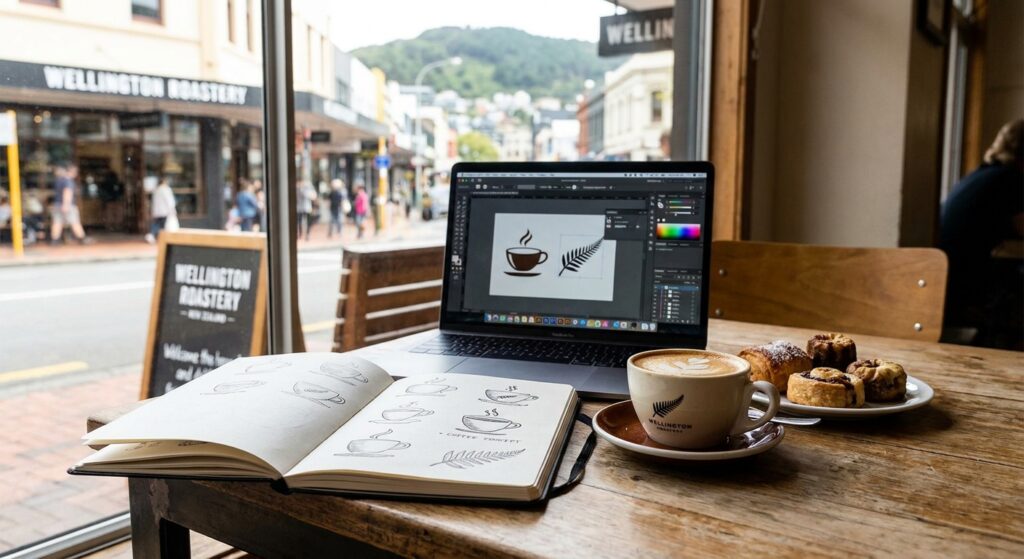
Logo design for cafes and food brands in NZ should begin with the places the identity will appear: a shop sign, a menu, a takeaway cup, a bag, a website or a product label. A concept that looks attractive in a presentation still needs to be checked against those real uses.
This agency-authored guide is a practical commissioning checklist. It does not rank logo styles or promise that a new identity will increase sales or recognition.
Write the business brief before choosing a style
Record the business name, how it is pronounced, what you serve, who you want to attract and what should make the experience recognisable. Include any existing identity that customers already know. Be specific about whether this is a first opening, a considered refresh or an additional site; those are different briefs.
- List the applications needed at launch and those that can wait.
- Identify who approves the name, design direction and final artwork.
- Supply existing files, supplier specifications and any confirmed restrictions.
- If local stories, language or cultural elements are part of the identity, identify an appropriate person to advise on their use before final approval.
Compare concepts on the same applications
A wordmark puts the business name first. A badge can group a name and supporting detail. A character or illustration can add personality. A symbol may need to be shown alongside the name in some uses. None of these options wins automatically for cafes, food trucks, bakeries or roasters.
Ask the designer to present the proposed routes on the same agreed items. Compare the clarity of the name, the hierarchy of information and the fit with the business rather than giving each route a different mockup. Record what you prefer and why, so revisions solve the brief instead of accumulating unrelated stylistic requests.
Test the actual size and material
Check a sign at its intended scale and viewing conditions. Inspect a menu and takeaway item at actual size. Review the identity on a phone and in the profile shapes you intend to use. A universal 20mm test or a claim that a logo must earn trust in three seconds cannot replace these checks.
Ask the relevant printer or fabricator about reproduction requirements. Colour count, fine detail, gradients and finishes need to be considered against the particular process and material. A single-colour or reversed version may be useful; agree and test it as part of the deliverables. Do not assume that a software choice or logo style determines production quality.
Keep the identity separate from every other design task
The logo is one asset. A menu layout, a window decal, a branded cup, a website and a packaged product each have their own content and production requirements. List which applications are being designed and which will only receive a logo file. This avoids expecting a logo quote to include a complete hospitality rollout.
If you are launching a product range, use the packaging brief and proofing guide to plan variant artwork, supplier specifications and approval responsibilities. Brand approval does not establish that product information has been appropriately reviewed.
Compare quotes and agree the handover
Compare the same concept and revision scope, application list, file deliverables and rights. Ask whether font licensing, illustration, photography, printing, signage manufacture and future changes are included or separate. Agree who supplies copy and who coordinates each supplier. Base the schedule on those inputs and approvals rather than a fixed industry-wide turnaround.
A useful handover can include the agreed primary and supporting logo versions, colour references, typography information, relevant screen and production exports and concise usage notes. Keep a master folder so the signwriter, web designer and next staff member can find the approved files. Confirm any restrictions instead of assuming all supplied assets can be used in every setting.
Coordinate the website and rollout
Website structure, menus, photography and opening information can be planned alongside the identity. Agree a point at which the visual decisions are approved for final application. For a refresh, create a list of existing signs, menus, profiles, packaging stock and digital pages, then decide the order of replacement around practical needs.
No Brainer is based in Auckland. Discuss the logo and application scope through our graphic design service, and coordinate any cafe website design as an explicit part of the project. Printing, fabrication and other specialist work should be confirmed in the agreed scope.
Cafe logo questions
Which logo style is best for a cafe?
There is no universal winning style. Compare a wordmark, badge, illustration or symbol against your name, audience and actual applications. Ask to see how each proposed route works on the items you will use.
How many colours should a cafe logo use?
Agree the palette with your designer and production suppliers. The practical choice depends on materials and processes; ask for any necessary single-colour and reversed versions rather than assuming a universal colour limit.
Does the logo need a coffee-cup icon?
No. Decide what should identify your business and help people read its name. A literal icon is an option, not a requirement, and should be assessed for distinctiveness and suitability.
How often should I replace the logo?
There is no fixed replacement interval. Review a change when there is a specific business problem, such as an unreadable name, unsuitable files or a changed proposition. Retain useful existing recognition where possible.
What should a cafe logo quote include?
Confirm research and concept scope, revisions, included variants and applications, final files, usage rights and exclusions. Separate design from signage, printing, photography, website work and later adaptations.
Should the website wait for the finished logo?
Coordinate the projects. Structure and content planning can often proceed while brand decisions are being made; agree when the logo, typography and colours must be approved for final page design.
Can the same identity work for a cafe and packaged products?
It can be planned across both, but test the actual pack formats and distinguish product names and variants. Packaging production and product-information approval are additional work, not automatically included in a logo file.
What files should I receive?
Agree editable or vector artwork where appropriate, screen and print exports, approved colour references, relevant logo versions and a short usage guide. Confirm font and image licensing and what rights are included in the agreement.
Related planning guides
- Compare logo design quotes and scope
- Plan a rebrand across customer touchpoints
- Plan a small-business website
Share your cafe or food-brand design brief with No Brainer, including the current files and the applications you need.