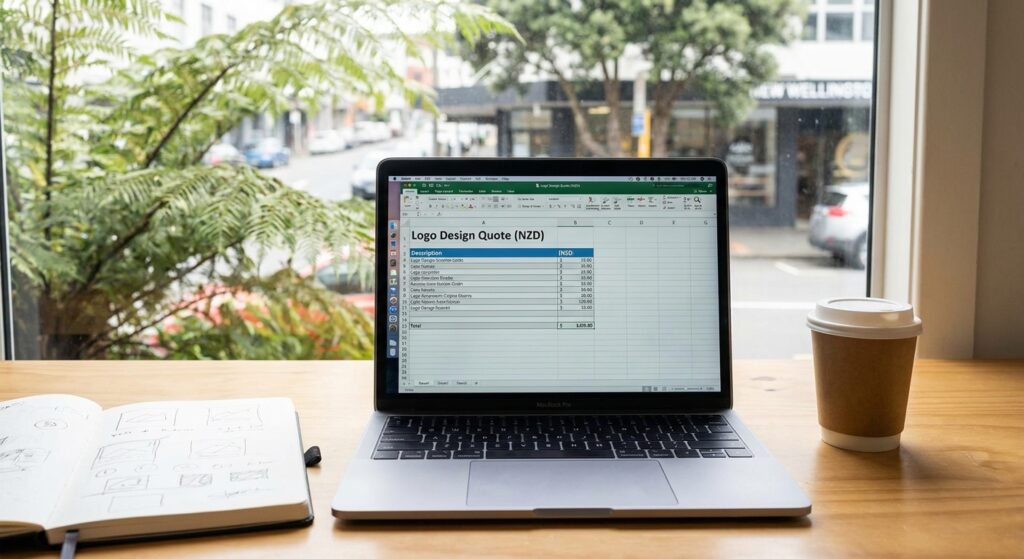
To price a logo design project in New Zealand, start by defining what the quote must cover. A logo redraw, a new identity and a wider rollout can involve different work. Comparing totals without those details makes it difficult to tell whether two proposals address the same need.
This agency-authored guide explains how to request and assess quotes. It does not establish a current NZ market-price survey or change No Brainer’s service offers. Ask for a proposal for your actual brief rather than treating an unsourced fee range as a fair-price benchmark.
1. Put the intended uses in your brief
List where the identity will appear: website header, social profile, signage, vehicle graphics, packaging, invoices or uniforms, as relevant. Include the business name, audience, existing assets and practical constraints. A designer needs to understand the application, not just the preferred colour.
Identify what you are buying. Is the task to refine an existing mark, develop new concepts, document a visual system or prepare approved artwork for production? If a name change or broader rebrand is involved, state that separately.
- Supply the correct business name and any required wording.
- Explain the problem the design should solve.
- Share relevant examples with reasons, rather than instructions to copy another brand.
- Name the decision maker and people who must approve the work.
- List intended applications, file requirements and launch dependencies.
2. Compare the same scope before comparing totals
Ask each provider to address the same requirements. A proposal may bundle the work into a fixed fee or show components separately; either can be useful if the inclusions and exclusions are clear. Ask which currency is used, whether GST is included or excluded, and what payment milestones apply.
Use this comparison record for each quote:
- Design work: research, concept development, refinement and any existing-artwork cleanup.
- Decisions: the number of concepts and review rounds, plus who approves them.
- Deliverables: approved variants, source artwork, export files and usage guidance.
- Rights: ownership, licences and restrictions that need to be resolved.
- Implementation: website, print or other applications included in the proposal.
- Commercial details: taxes, payment stages, exclusions and the process for additional work.
Mark an unanswered requirement as a question for the provider. Do not assume a freelancer excludes source files or an agency includes a brand manual. A low or high total alone does not prove quality, completeness or suitability.
3. Make revisions and approvals explicit
Ask what counts as a revision round, how feedback is supplied and what happens when the direction changes. Consolidate comments through the agreed decision maker. This helps the team work from one brief, but there is no measured email-saving percentage established by this guide.
For example, changing an approved name after artwork is completed may require different work from adjusting spacing during a planned review. This is a scope example, not a fee estimate. Request the effect on cost and timing before authorising the change.
Agree the input dates as well as the designer’s milestones. A deadline depends on availability, approvals and any production work. Confirm a rush charge if one applies; do not infer an industry-wide premium or guaranteed discount from a generic article.
4. Specify files for the job they need to do
Agree the editable artwork and usable exports at quote stage. Vector artwork can be scaled without the pixelation associated with enlarging a raster image; Adobe explains the difference between raster and vector graphics. A familiar file extension alone is not enough to establish that the contents meet your needs.
Ask the printer, signwriter or developer for their requirements. An outlined print file, editable working file and transparent web image can serve different purposes. Check the actual delivered files and approved variants, including their appearance on relevant backgrounds.
Record any font, stock-image or other asset licences, and ask how your team can reuse the work. Do not assume that paying for a design resolves every ownership or trade-mark question. Obtain appropriate specialist advice where needed.
5. Separate the logo from rollout costs
A logo fee does not automatically include signage manufacture, packaging print, website changes, photography, advertising or ongoing design. Identify who will implement each application and what that work costs. Usage guidance can range from a short reference sheet to a fuller identity system; specify what your team needs.
Keep a list of included and excluded work so an optional item is not mistaken for a missing promise. Do not remove a necessary deliverable simply to make totals look comparable. Ask the supplier how alternative scopes would affect the result and handover.
Before you accept a proposal
Check the scope, approval process, payment stages, usage rights, cancellation provisions and handover responsibilities. Resolve unclear wording before committing. Keep the accepted version and subsequent approved changes together.
No Brainer’s graphic design work is scoped for the business. Bring your intended uses, existing assets and comparison questions to a logo-project scope discussion. If the project includes a wider identity transition, our rebranding checklist covers the customer and website rollout.
Frequently asked questions
How much does logo design cost in New Zealand?
A reliable quote depends on the agreed scope and provider. This guide does not establish a current NZ market average or publish a No Brainer price. Request a written proposal showing the deliverables, exclusions, tax treatment and any additional charges.
How do I compare two different logo quotes?
Give both providers the same brief, then compare concepts, revision rounds, file delivery, guidelines, usage rights, timeline, implementation and exclusions. Record unanswered items before comparing totals.
Does a higher quote mean better design?
Price alone does not establish quality or suitability. Review relevant work, the proposed process, responsibilities and what you will receive. Ask for explanations of differences rather than assuming a provider category determines value.
How many revisions should be included?
Agree the number, what a round covers, who consolidates feedback and how further work is approved and charged. There is no universal revision allowance demonstrated by this guide.
Which logo files should I request?
Agree editable source artwork and suitable exports for your intended uses, such as a scalable vector version and transparent raster images. Ask your printer or developer about requirements and confirm that the delivered files actually open and contain the expected artwork.
Are brand guidelines part of a logo quote?
Only if included in the agreed scope. Specify the colour and typography information, spacing rules, variants and usage examples you need, and ask whether a separate fee or licence is involved.
Will a rush deadline cost more?
Ask the provider to confirm availability, dependencies and any additional charge in writing. A universal rush percentage or promised turnaround is not established here.
How should I handle changes after approval?
Use the agreed change process. Describe the request, ask for its effect on fees and delivery, and approve it before further work starts. Keep the original accepted scope and decisions available.